

Hunting Binoculars
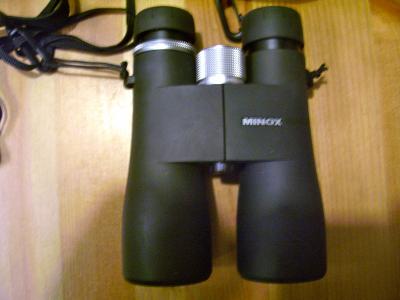 Binoculars – One of the most important pieces of equipment a hunter needs while on a hunting trip. A person who spends a great deal of time outdoors definitely needs to have a good pair of binoculars. Hunting binoculars are made for hunters who hunt in the highlands or in the bush, giving them a great advantage to spot, stalk and shoot the animal.
Unlike a telescope, binoculars give users a three-dimensional image adding perception of depth while viewing distant objects magnified many times over. Essentially there are two types of binoculars Porro prism and Roof prism. Porro prism binoculars are wide, the objective lenses are well separated, but off center from the eyepiece.
Roof prism binoculars have objective lenses that are more or less aligned with the eyepieces. They are more compact, narrow, and costlier than Porro prisms binoculars. Major European optical manufacturers like Leica, Zeiss and Swarovski manufacture only roof prism binoculars.
Optical parameters
Magnification in layman term is the magnifying power of the binocular: e.g. in an 8 x 40 binocular. The figure (8) indicates the magnifying power. This means the object is magnified by 8x, so that the object appears eight times nearer than it actually is. The figure (40) indicates the width of the objective lens at the far end measured in millimeters. A wider lens will admit more light into the binocular, resulting in a brighter image than a 8 x 20 model.
| Exit pupil diameter or EPD: Exit pupil diameter is amount of light that reaches the eye. It is calculated by dividing the diameter of the lens at the far end by the magnification, so in this case the EPD is 5. During dawn and dusk binoculars with a higher EPD are recommended and in bright sunlight a lower EPD binocular is advisable. Prisms: Porro prism binoculars are bulkier and heavier than Roof prism binoculars, which are more compact, smaller and lighter. |
Objective lens
Magnifying lens of a binocular is coated to reduce the loss of light and also to reduce the glare. There are four types of coating available.
Coated: The surface of lens at the far end is coated with a single layer.
Fully coated: A single layer of coating is on all air to glass surfaces.
Multi-coated: the lens on the far end has multiple layers of coatings.
Fully Multi-coated: All air to glass surfaces have multiple layers of coat.
Field of view: It is the width of the panoramic view when observed from 1000 yards or 1000 meters. It is also expressed in an angular value as to how many degrees can be viewed. For looking at objects that are smaller a narrower field of view is preferred and when scanning a landscape a wider field of vision is preferred.
Focus
Some binoculars have focus preset to infinity and adjustments are not required the focus range will be 20meters to infinity. However to observe objects at shorter distances manual focus are used.
Specialty binoculars
Hunting Binoculars
There is a vast range of various hunting binoculars available in the market today. Many of the best hunting binoculars manufactured by both the American and European manufacturers can be found in stores that specialize in hunting gear or outdoor equipment. Hunting binoculars come with a number of features that are ideal for various forms of hunting.
Some of the features available on hunting binoculars include a range finder like the Leica Geovid binoculars. A range finder in the binocular allows the hunter to range the distance between him and the animal he is hunting. Most hunters consider a range finder to be a critical piece of equipment. A range finder works by sending out a laser beam to the object, which then bounces off the object and is then sent back to the range finder binoculars. The range finder binoculars have a micro-processing chip inside that calculates the distance between the viewer and the object.
Weight of the binocular is also important as the roof prism binoculars are lighter and can be held for longer durations without any strain on the arms. Tripods are also recommended when observing for longer durations. To alleviate stress on your neck from the neck strap try a pair of Bino Caddy’s.
Rubber armoring protects binoculars from bangs. Reading hunting binocular reviews will help in making the right decision about the type of binocular needed for your outdoor trip.